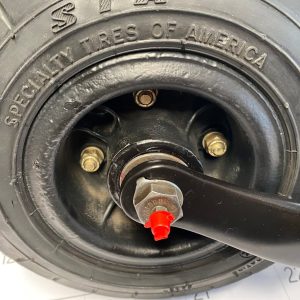
The Scott 3200A Tailwheel – Fully Rebuilt gives operators an alternative to an unknown used assembly when the rebuild process, component condition, and package contents are documented clearly. Clear rebuild records help aircraft owners and maintenance professionals evaluate the tailwheel before installation.
The Scott 3200A Tailwheel Assembly combines wheel support, directional steering, swiveling get more info capability, and tail-load management within one compact component. Professional rebuilding can renew worn mechanical relationships when suitable components and procedures are used.
An Aircraft Tailwheel Assembly supports the rear of a conventional-gear airplane and contributes to directional control throughout ground operations. A General Aviation Tailwheel may be used on training aircraft, classic taildraggers, bush airplanes, utility platforms, experimental aircraft, and restored vintage designs.
Whether the goal is a Replacement Aircraft Tailwheel or a broader purchase of General Aviation Landing Gear Parts, qualified review provides the strongest foundation.
Overview of the Fully Rebuilt Scott 3200A
The Scott 3200A combines mechanical steering and swivel functions in a design familiar to many tailwheel pilots, restorers, and aviation maintenance professionals. Replacing the tailwheel alone may not correct a wider installation problem.
Benefits of the Scott 3200A Tailwheel Assembly
The Scott 3200A Tailwheel Assembly includes a wheel-and-fork structure combined with steering and swiveling mechanisms for suitable tailwheel-equipped airplanes. Detailed documentation gives buyers a stronger basis for comparing available Scott 3200A Tailwheel Assemblies.
Scott Tailwheel Assembly Rebuild Process
Final adjustment and functional testing should confirm that the Scott Tailwheel Assembly operates consistently. A freshly painted assembly may still contain worn bearings, weak springs, excessive clearances, or damaged steering components when no true rebuild was completed.
Aircraft Tailwheel Assembly Maintenance
The assembly carries tail weight while managing runway irregularities, side loads, repeated landing cycles, and directional forces. A bent or fatigued tail spring can alter alignment and the aircraft’s ground attitude.
General Aviation Tailwheel Applications
Grass, gravel, and dirt can introduce moisture, abrasive particles, vegetation, and debris into moving areas. A Scott 3200A may suit several aircraft types, but broad fitment should never be assumed from category alone.
Maintaining an Aircraft Tailwheel
An Aircraft Tailwheel supports the rear fuselage and helps the airplane move during taxiing, parking, turning, takeoff, and landing. The tire should be inspected for cuts, flat spots, cracking, uneven wear, deterioration, contamination, and correct condition.
Maintaining a Taildragger Tailwheel
A Taildragger Tailwheel assists conventional-gear aircraft with directional control during taxi, takeoff, landing, and ramp maneuvering. Maintenance should address both ordinary wear and damage following unusual ground events.
Understanding an Aviation Tailwheel System
An Aviation Tailwheel System includes the tailwheel assembly, tail spring, steering chains or links, steering springs, mounting hardware, surrounding structure, and its relationship with the rudder controls. Steering chains or links should have suitable tension, symmetry, attachment security, and freedom of movement according to the aircraft configuration.
Inspecting Tailwheel Steering Components
Wear in these components may create looseness, poor tracking, inconsistent engagement, or delayed control. The mechanism should not interfere with surrounding structure, chains, springs, fairings, or nearby aircraft components.
Maintaining Aircraft Ground Handling Components
A correctly adjusted tailwheel may support smoother maneuvering without excessive brake use. Ground personnel should avoid forcing the aircraft beyond suitable steering limits.
Maintaining Scott 3200 Series Components
The Scott 3200 Series Tailwheel has become familiar within general aviation through its use on numerous conventional-gear aircraft and restoration projects. Accurate information reduces ordering mistakes and improves buyer confidence.
Heavy-Duty Aircraft Tailwheel Applications
The tailwheel should match the aircraft’s suitable configuration, tail load, geometry, and operating environment rather than being selected from appearance alone. Aircraft operating regularly from unimproved strips may require more frequent servicing.
Inspecting Tailwheel Aircraft Parts
Correct Tailwheel Aircraft Parts protect the integrity and performance of the rebuilt assembly. The rebuild should examine all interacting parts rather than focusing on external appearance.
Benefits of an Aircraft Steering Tailwheel
Alignment and steering-link condition influence how accurately the wheel follows pilot input. Uneven tire wear may indicate alignment, bearing, or steering concerns.
Replacement Aircraft Tailwheel Guide
Correct identification reduces compatibility problems, return costs, and installation delays. A professional pre-installation review protects both the aircraft and the buyer’s investment.
Inspecting General Aviation Landing Gear Parts
Main-wheel alignment, brake condition, tire pressure, and airframe rigging can influence how a taildragger behaves on the ground. The product description should explain whether components are rebuilt, repaired, serviced, inspected, untested, or sold for parts.
Scott Tailwheel Condition Checklist
A pre-purchase inspection should confirm the assembly identity, rebuild scope, structural condition, included components, tire status, steering arrangement, and available documentation.
- Verify the tailwheel model, mounting dimensions, steering-arm arrangement, wheel size, and package contents through suitable references.
- Inspect the assembly for cracks, corrosion, bending, damaged threads, enlarged holes, fork distortion, tire wear, rough rotation, and excessive looseness.
- Require packaging that protects the wheel, fork, steering arms, mounting surfaces, fittings, and loose hardware from impact and movement.
Scott Tailwheel Fitment and Adjustment
Professional installation helps protect both the rebuilt Scott 3200A and the aircraft structure. The steering linkage should respond properly without restricting rudder movement.
Professional follow-up adjustment may be necessary after initial operation.
Scott Tailwheel Maintenance Guide
Long-term maintenance includes lubrication, tire inspection, bearing review, steering-link checks, cleaning, fastener inspection, spring evaluation, and monitoring of ground-handling performance. Recurring shimmy or unusual tire wear should be diagnosed rather than addressed through repeated adjustment without identifying the cause.
Cleaning methods should avoid forcing dirt deeper into bearings, bushings, and internal steering components.
Scott 3200A Tailwheel Conclusion
The Scott 3200A Tailwheel – Fully Rebuilt may suit aircraft owners, bush operators, restoration facilities, flight schools, maintenance organizations, and pilots seeking renewed ground-handling performance. Careful technical and commercial evaluation can reduce compatibility problems, repeated repairs, project delays, and unexpected costs.
Whether the project involves an Aircraft Ground Handling Tailwheel, Scott 3200 Series Tailwheel, Heavy-Duty Aircraft Tailwheel, or Tailwheel Aircraft Parts, rebuild documentation should be reviewed carefully. With verified compatibility, correct installation, professional steering adjustment, suitable lubrication, and routine inspection, the assembly can provide dependable long-term value.